Industry
Entertainment, Sport, Live streaming
Company
Professional Bull Riders
My Role
Lead Product Designer
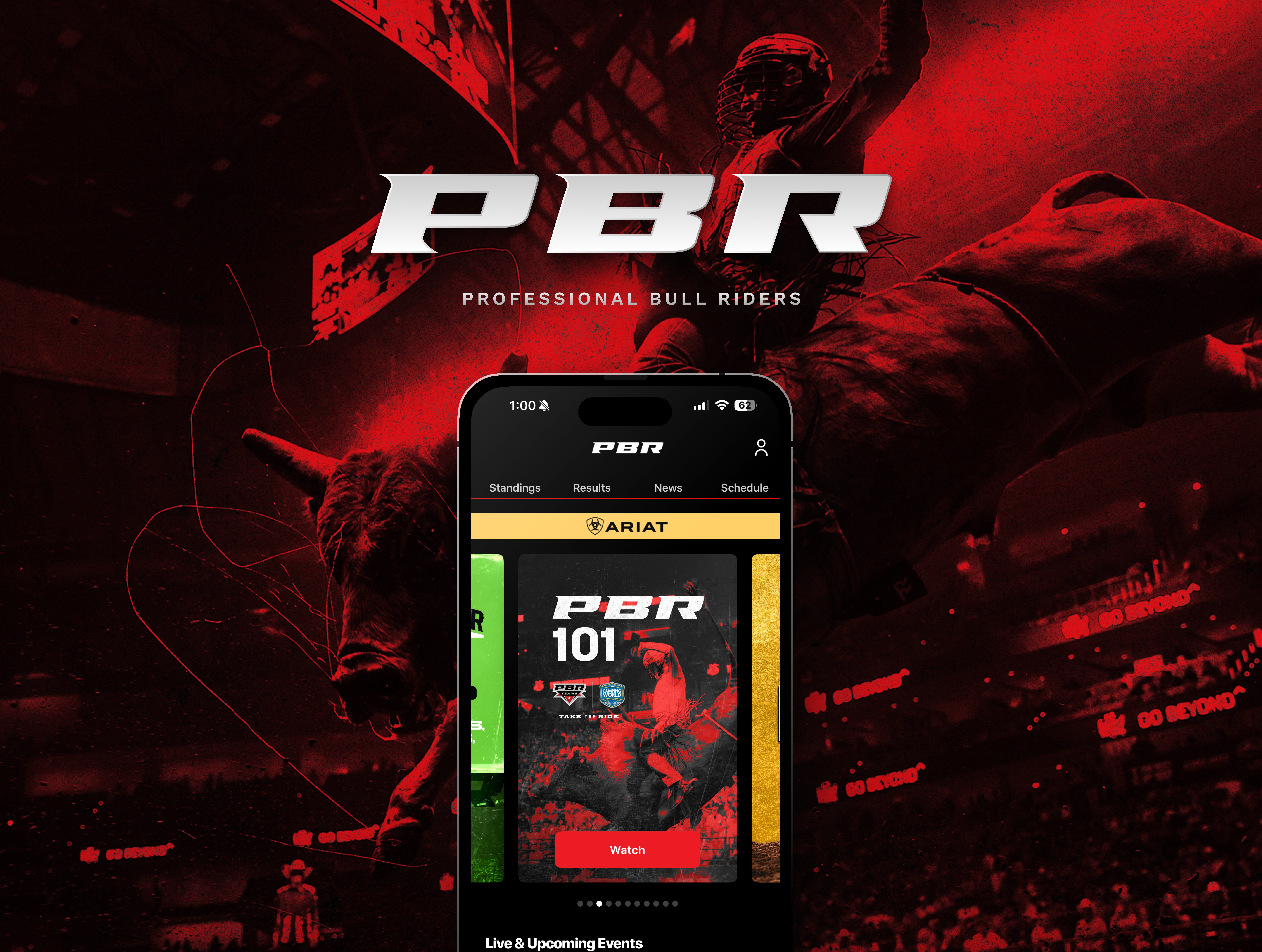
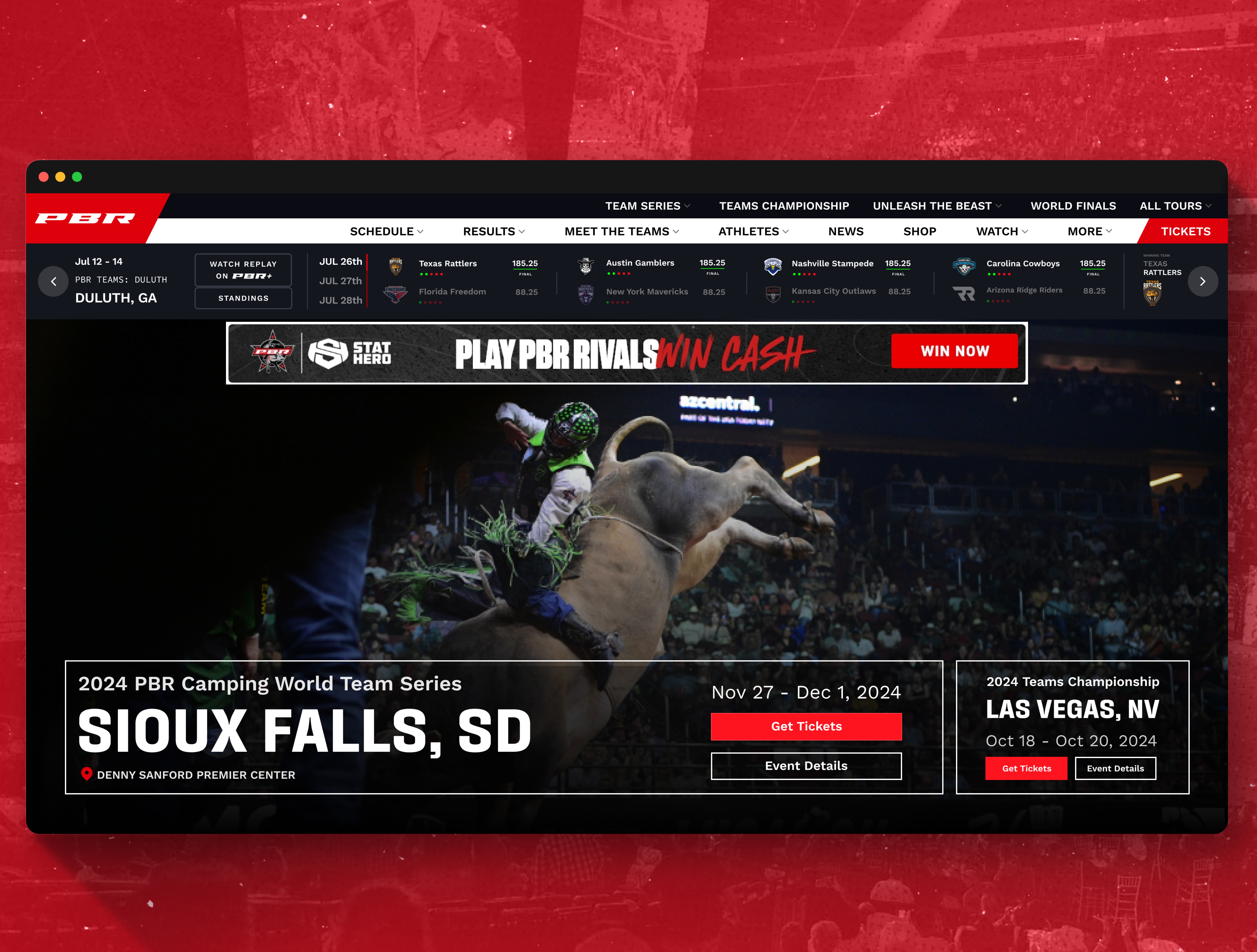
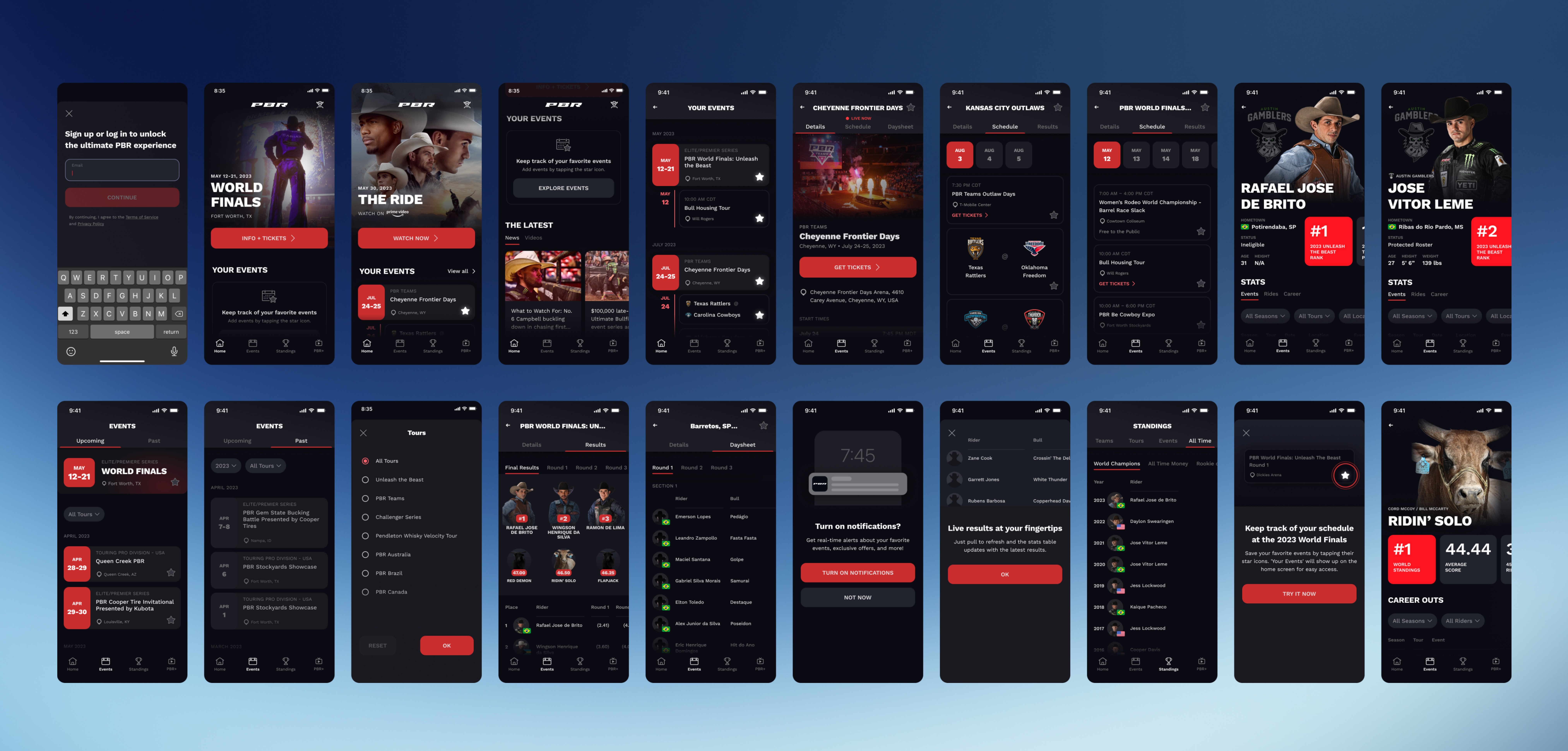
As Lead Product Designer, I led the end-to-end product design process across PBR.com, the Watch PBR streaming platform, and the refreshed mobile app experience.
My ownership covered the full lifecycle:
- Discovery workshops with leadership and stakeholders
- User research and behavioral analysis using Google Analytics
- Defining user segments (die-hard fans, Gen Z fans, tourists/casual visitors)
- Information architecture restructuring
- UX and UI design across web and mobile
- High-fidelity prototyping in Figma for alignment and validation
- User testing and iteration based on feedback
- QA testing before launch to ensure design accuracy and usability
- Creation of a unified design system for web, app, and marketing assets
- Banner, thumbnail, and digital asset standards used across social and promotional channels
I worked closely with marketing, partnerships, engineering, and leadership teams to align user experience with business goals, ticket sales, and streaming growth.
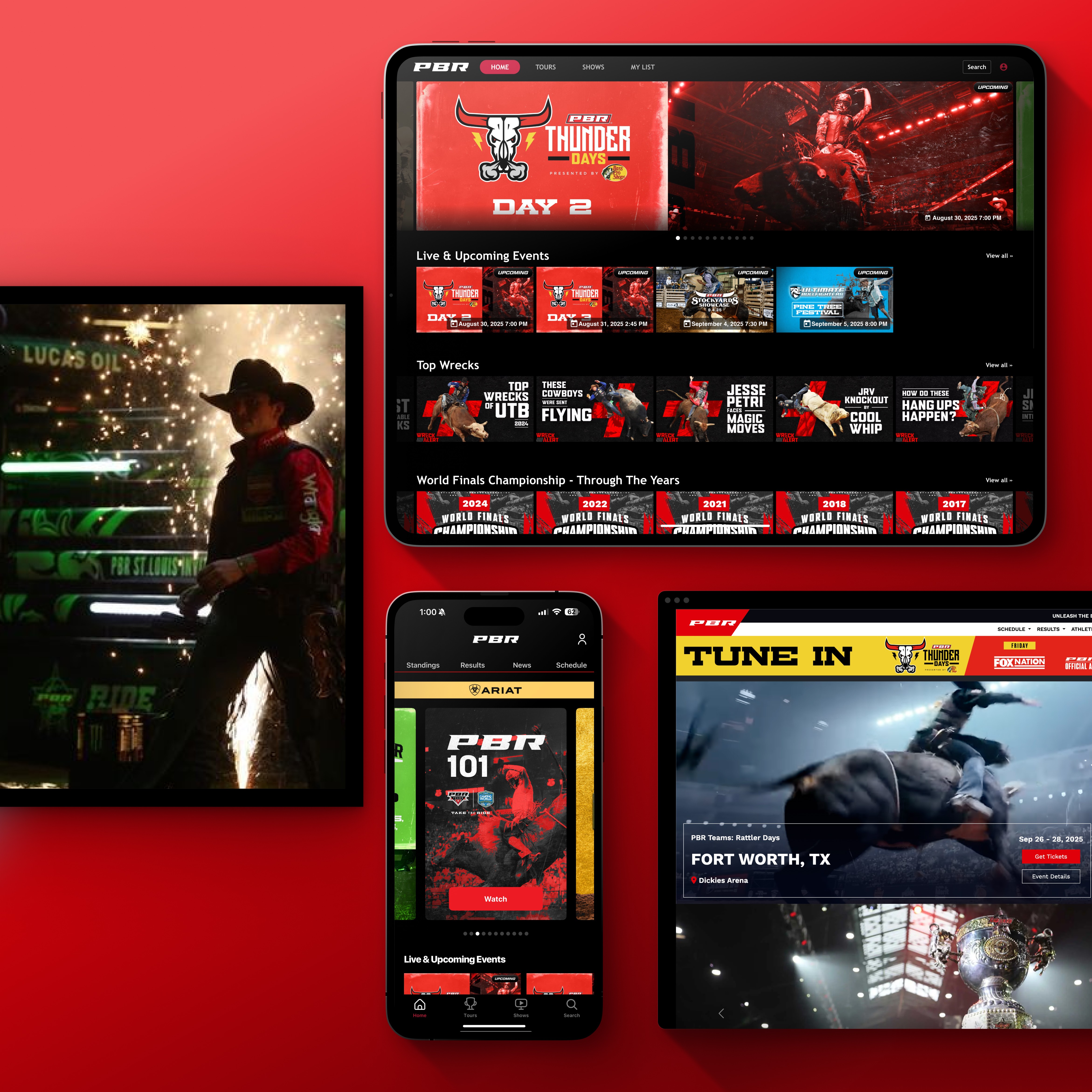
Poor Mobile Experience
Nearly 90% of fans were accessing content via mobile, yet navigation and layouts were difficult to use on smaller screens. Important information required too many taps, and event discovery was not optimized for mobile behavior.Fragmented Brand Identity
The website, streaming platform, and social channels lacked a consistent visual language. Typography, colors, and asset styles varied across platforms, which weakened brand perception and trust.Low Streaming Engagement
Watch PBR’s interface made it difficult for fans to discover live events, highlights, and replays. Key content was buried, reducing viewing time and limiting growth opportunities.Outdated UI & Energy Mismatch
The digital experience did not reflect the intensity and excitement of live PBR events. This disconnect reduced emotional engagement and limited opportunities to drive ticket sales and repeat visits.
The goal was clear: create a modern, mobile-first, and unified experience that matched the energy of the arena while improving engagement and conversion.
1. Discovery & Research
Before redesigning, I focused on understanding real fan behavior and business priorities.
Analyzed Google Analytics to identify user flows, drop-off points, and high-traffic content areas
Studied engagement metrics across mobile and desktop
Benchmarked best-in-class sports platforms such as NBA, UFC, and NFL to understand modern patterns in navigation, live content surfacing, and storytelling
This helped define clear priorities: simplify navigation, surface live content faster, and strengthen the emotional impact of the brand.
Result: Clear data-backed direction for redesign decisions and alignment across stakeholders.
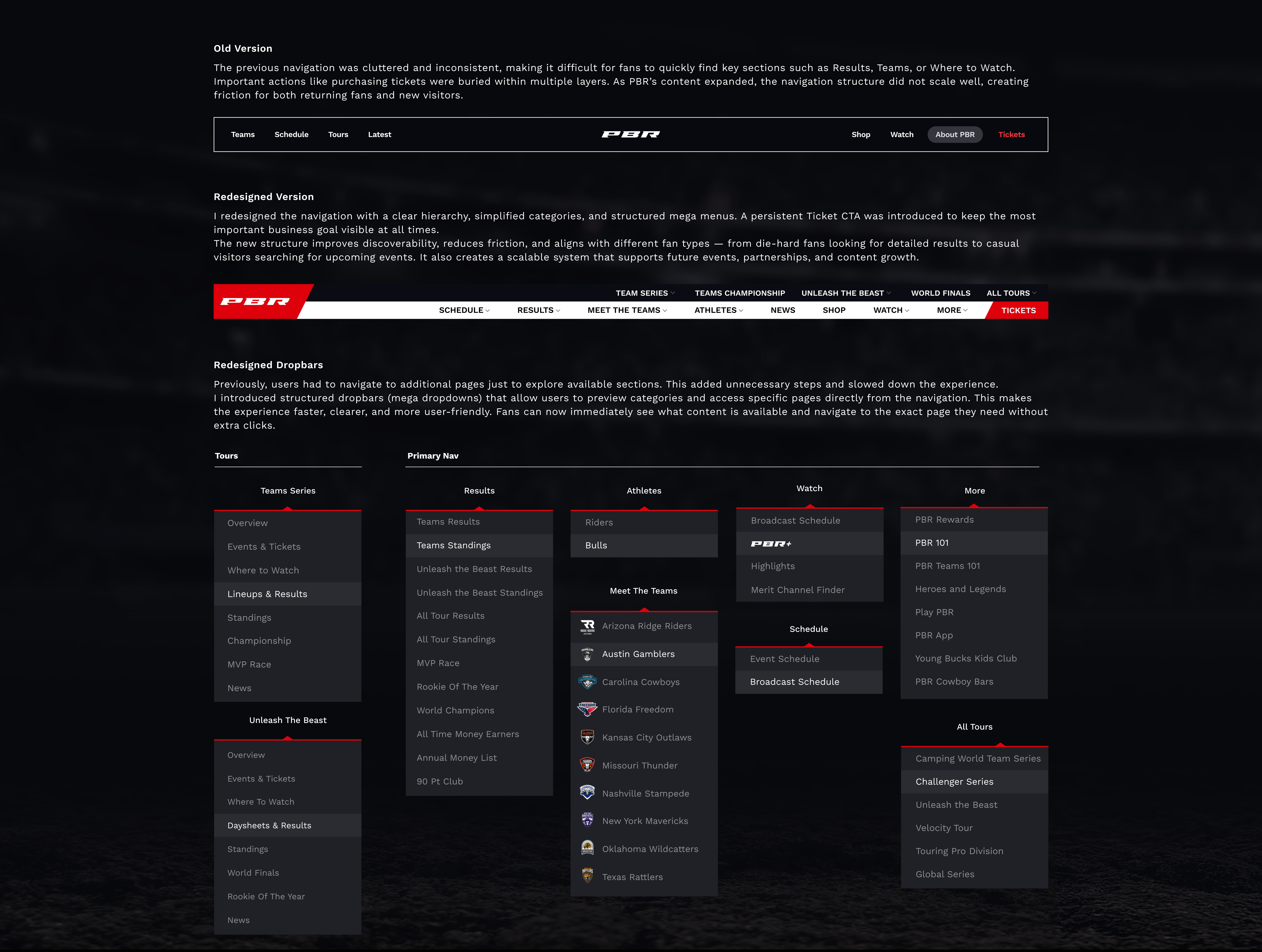
2. Navigation & Information Architecture Redesign
The original navigation was cluttered and inconsistent. Key sections such as results, teams, and where to watch were difficult to find. Ticket purchases were buried, and the structure did not scale with PBR’s expanding content ecosystem.
I redesigned the navigation with a clear hierarchy and mega menus, simplified categories based on fan behavior, and introduced a persistent ticket CTA. The new structure improved discoverability, reduced friction, and created a scalable foundation for future growth across events and leagues.
Result: Faster access to high-priority content, stronger ticket visibility, and a navigation system built to scale.
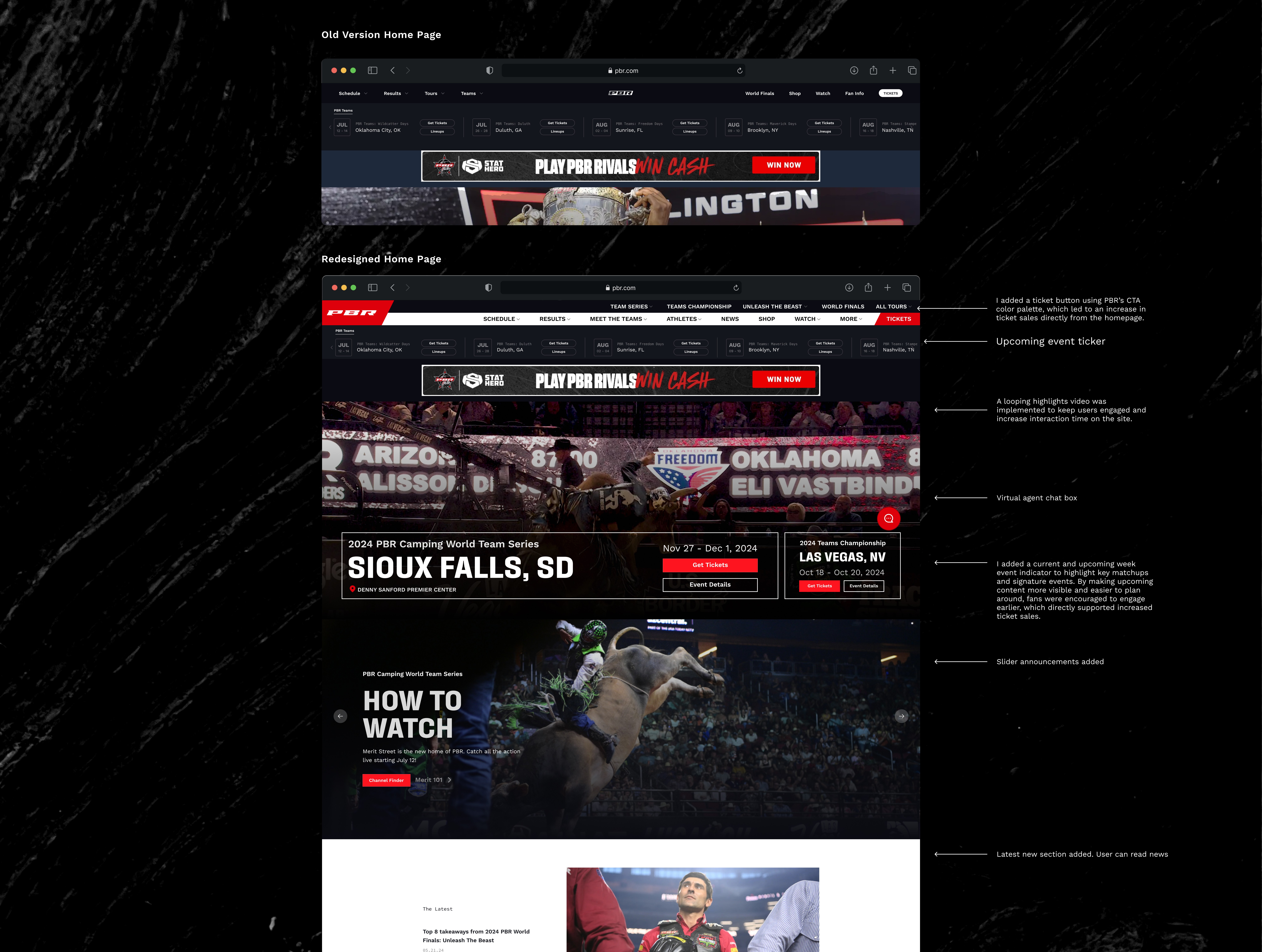
3. Homepage Redesign: Matching the Energy of the Arena
The old homepage was static and text-heavy. Event information and ticket access were buried, limiting engagement and conversions.
I introduced a dynamic looping highlight video to immediately reflect the intensity of live events. A persistent ticket CTA in PBR’s signature red increased visibility, while upcoming events, matchups, and “How to Watch” content were surfaced clearly above the fold.
The new layout balanced storytelling with action. Fans could quickly understand what’s happening now, what’s coming next, and how to participate.
Result: Increased engagement, stronger emotional impact, and clearer ticket conversion paths.
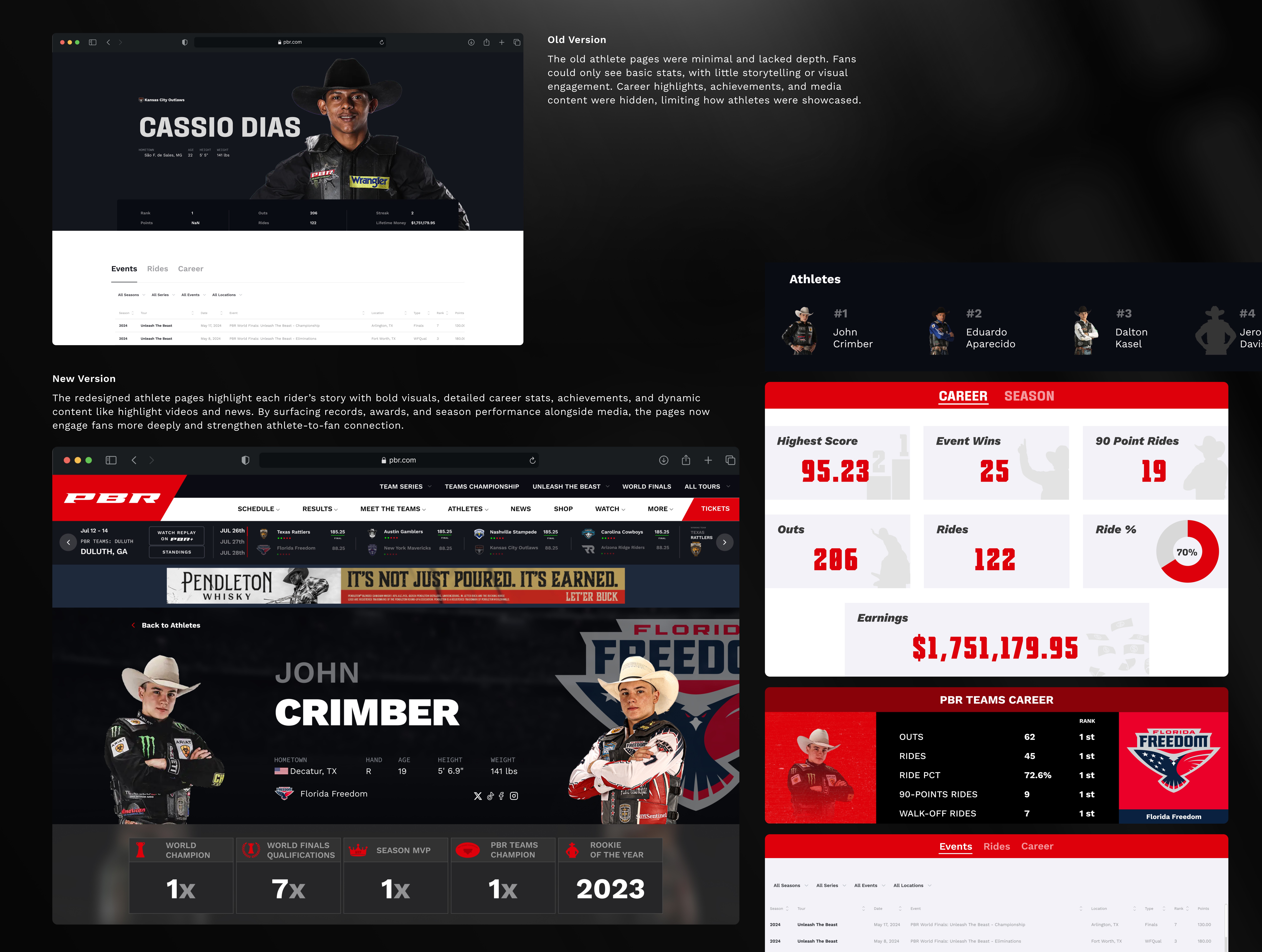
4. Elevating the Athletes Experience
Previously, athlete pages were minimal and lacked storytelling depth. Fans could only see basic stats, with limited visibility into career highlights, achievements, or media content.
I redesigned athlete pages to highlight each rider’s identity with bold visuals, detailed career statistics, awards, season performance, and embedded highlight videos. Records and achievements were surfaced alongside media to create a richer narrative.
This shift transformed athlete pages from static profiles into dynamic storytelling hubs that strengthen the rider-to-fan connection.
Result: Deeper engagement with athlete content and stronger emotional connection to the sport.
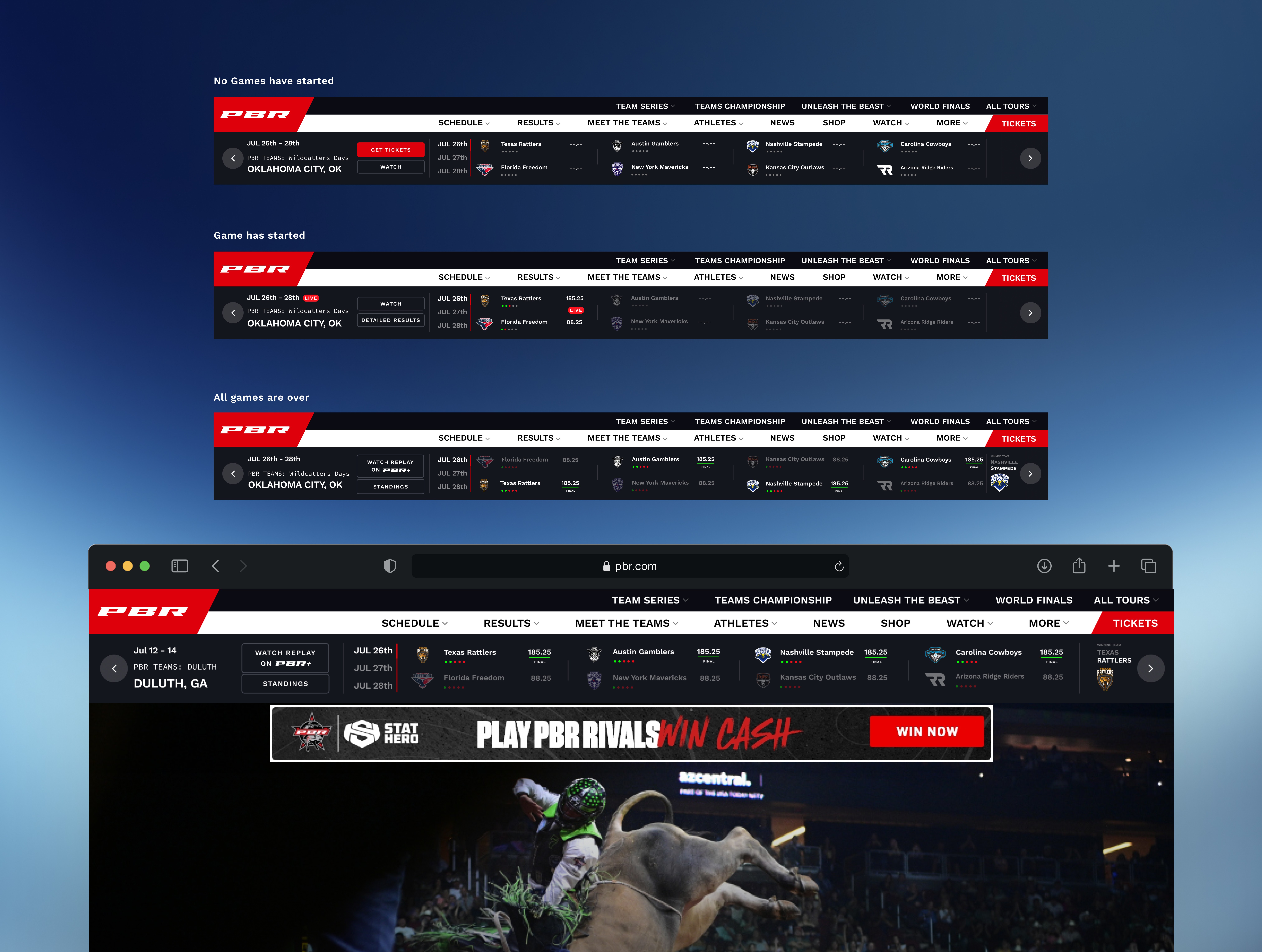
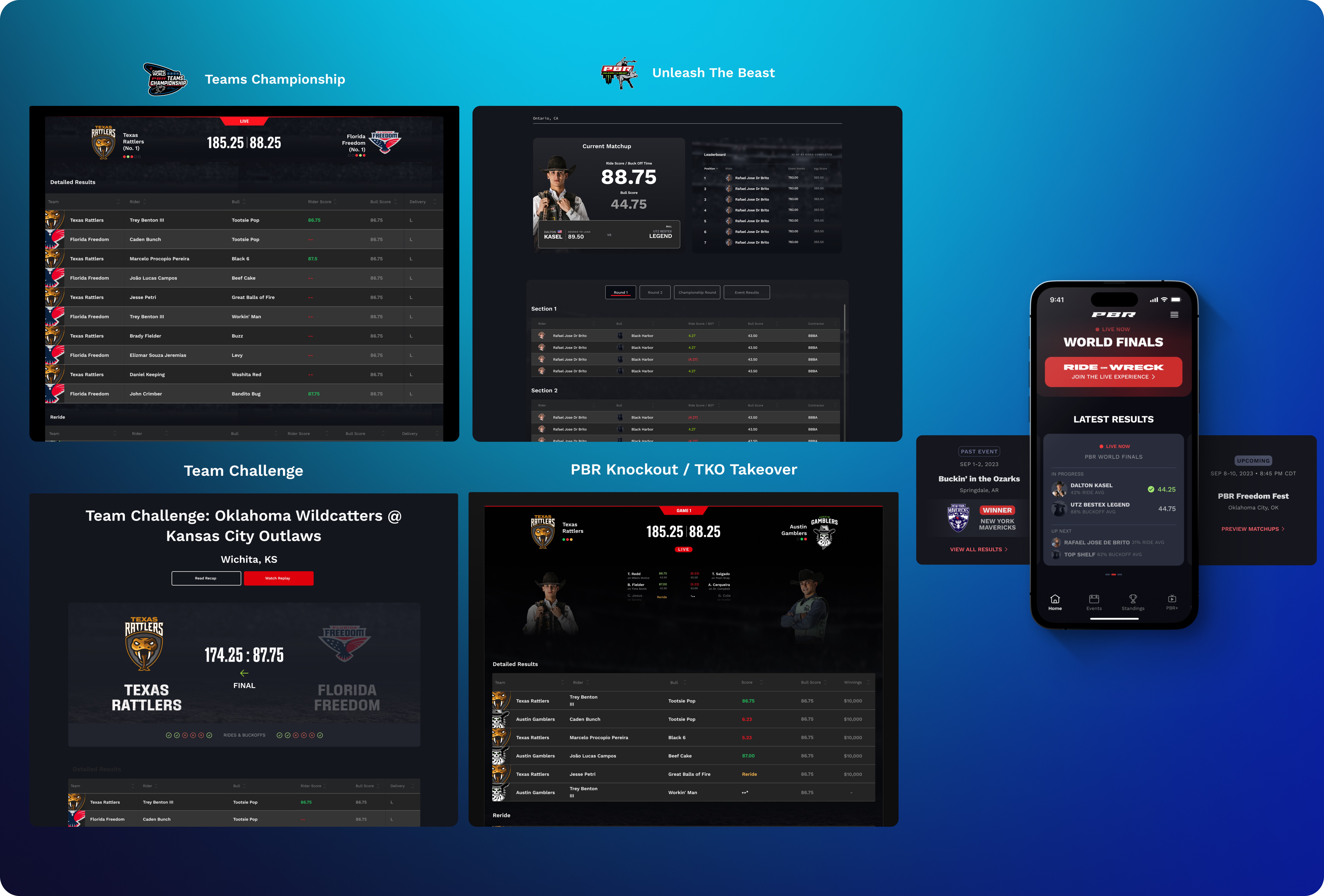
5. Real-Time Ticker & Live Scores System
Fans previously had no easy way to track live scores, schedules, or game status directly from the navigation. This reduced engagement during live competitions.
I designed a dynamic ticker system that adapts based on event status:
Before games: promotes tickets and schedules
During games: displays live scores and match status
After games: highlights replays, standings, and results
This real-time layer keeps fans informed without requiring deep navigation and increases visibility for both tickets and streaming.
Result: Stronger live engagement and improved visibility of key event content.
6. Mobile-First Redesign Strategy
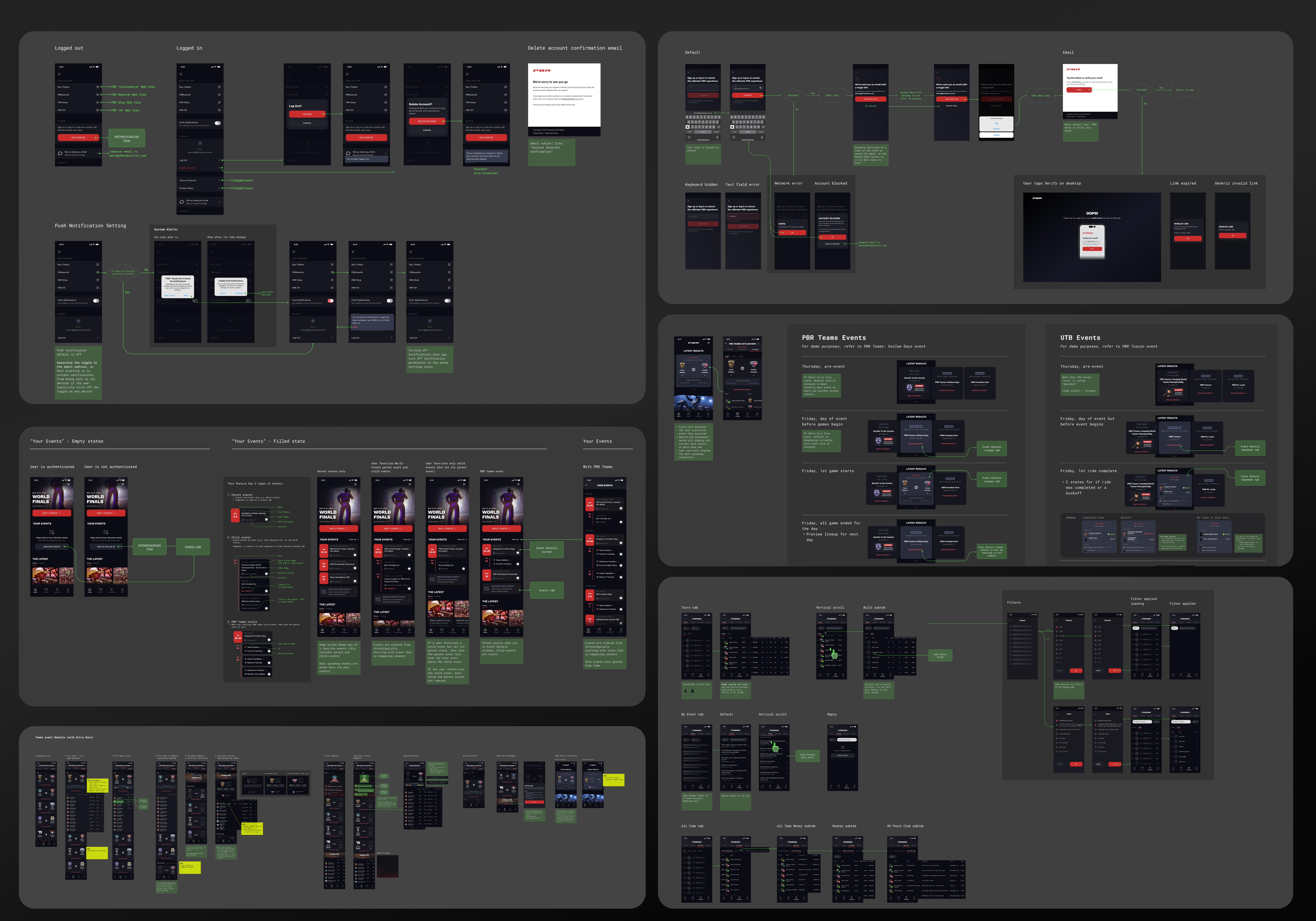
With nearly 90% of fans accessing PBR digitally through mobile, I approached every redesign decision with a mobile-first mindset.
Layouts were rebuilt responsively, navigation simplified for thumb-friendly interaction, and content prioritized based on real user behavior data. Event discovery, ticket purchasing, and live viewing were optimized to reduce friction on smaller screens.
Result: Significant growth in mobile engagement and improved usability across devices.
7. Building a Unified Design System
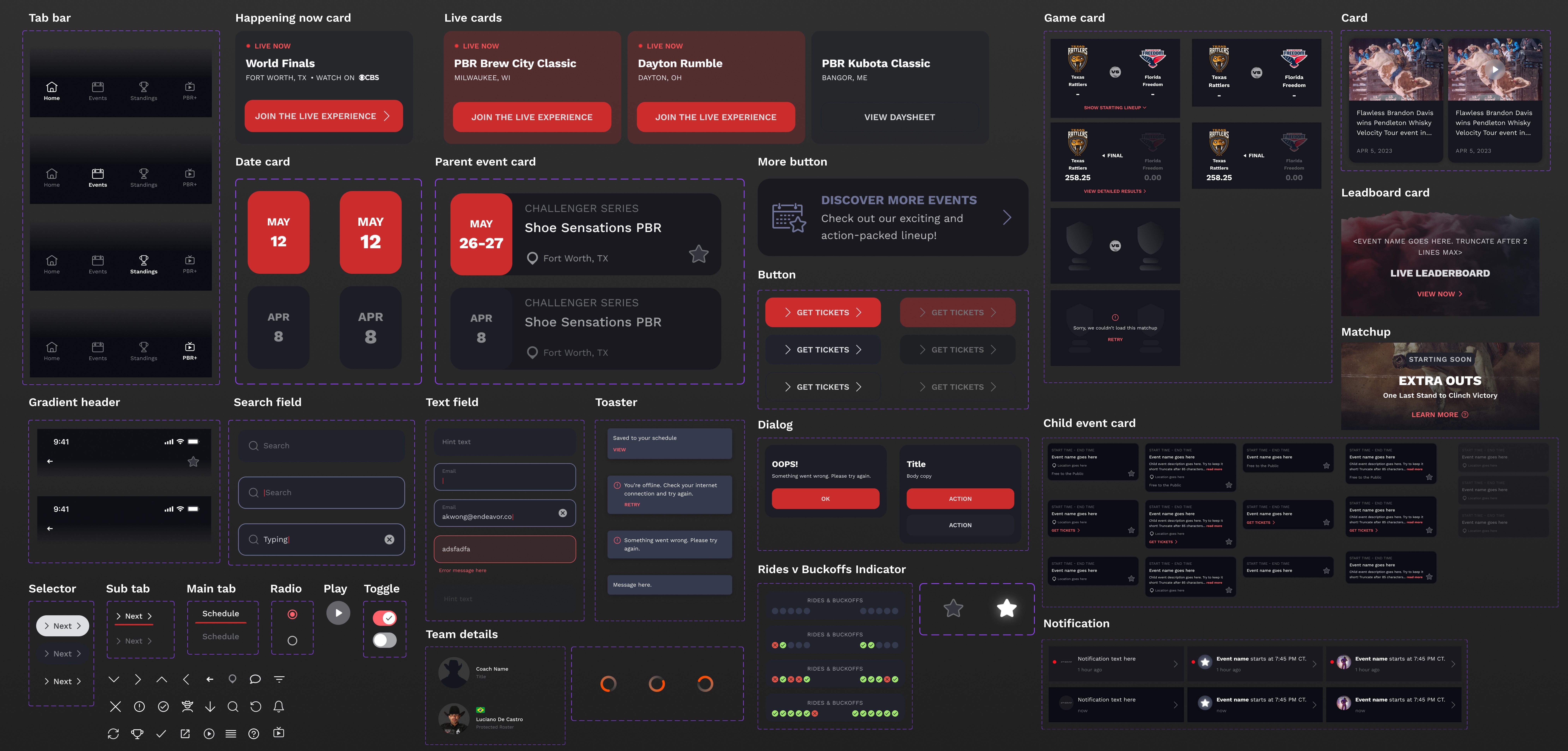
The website, streaming platform, and marketing assets previously lacked visual consistency.
I created a unified design system in Figma that included:
Standardized typography and color systems
Reusable UI components
Banner and thumbnail templates
Social and promotional asset guidelines
This system ensured brand consistency across PBR.com, Watch PBR, the mobile app, and marketing channels. It also improved handoff efficiency through annotated Figma files and structured component libraries.
Result: Stronger brand cohesion, faster iteration cycles, and smoother developer collaboration.
8. Visual Design
I helped designing PBR's social media, branding and graphics.

The redesign was driven by real user data and validated through analytics and testing
.
I analyzed Google Analytics data and identified three primary user groups:
Die-hard fans who follow rankings, live scores, and detailed stats
Gen Z fans who engage through highlights, fast content, and mobile-first interactions
Tourists / casual visitors looking for quick event info, tickets, and schedules
The challenge was to design a system that served all three audiences without overwhelming any of them.
Through mobile-first UX improvements, clearer CTAs, simplified navigation, and stronger event surfacing:
Increased overall user engagement by 90% after redesign
Significantly increased mobile user growth and interaction
Improved ticket sales through stronger homepage CTA placement and clearer event flows
Increased visibility and performance of partnership-driven pages through strategic content structuring
By restructuring key pages around business priorities and partnership opportunities, I aligned product design directly with revenue goals.
Collaboration with marketing, partnerships, engineering, and leadership ensured that design decisions supported both fan experience and commercial growth.
This project demonstrates my ability to:
Design for multiple audience types within one ecosystem
Use analytics and user testing to guide product decisions
Align UX improvements directly with revenue and ticket sales
Build scalable systems that support marketing and partnership growth
Collaborate cross-functionally at a leadership level
At PBR, design was not just about visuals. It was about elevating a major sports brand digitally, increasing engagement, and turning fan excitement into measurable business impact.
This reflects my approach as a product design leader: data-informed, business-aligned, and built for scale.